(click an image to see it animated)
Inspired by my earlier Diagonaly griddy pattern, I made similar grids based on card and dice games. I made a computer program to generate each one, and then I edited them into GIFs with Gimp (and manually fixed one pixel each frame on the cribbage one; nobs is guaranteed if you have all jacks, so that shouldn't have a blue tint. It's extremely subtle but it was bothering me.)
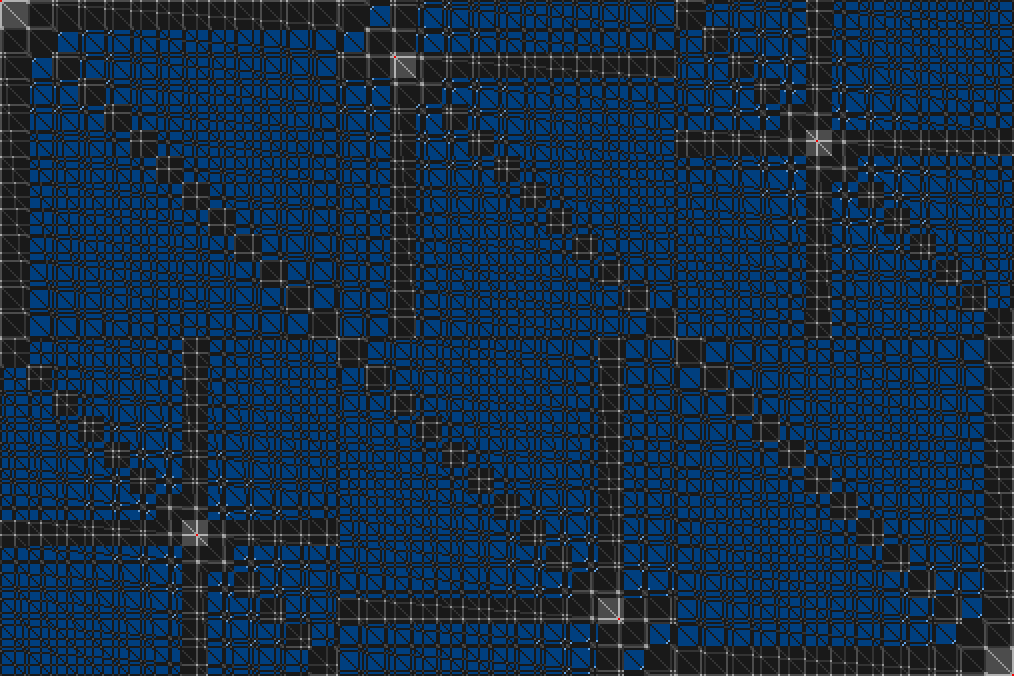
The first one is based on poker. It's based on a 13×13 grid, where each row represents a card and each column represents a card (2 in the top/left through ace in the bottom/right), and then each grid cell is divided into a further 13×13 grid, where each row represents another card and each column represents another card, and then each frame in the animation represents a card. That means that each pixel in the animation represents one five-card poker hand, which is then colored based on what kind of hand it is, with lighter colors being better hands. If a hand could be multiple things depending on the suits, then it's tinted blue (the dark blue is hands that can either be a high card or a flush; the light blue specks are straight or straight flush). The tiny red dot represents five-of-a-kind, which would be impossible with a regular deck of cards (with no wild cards). This ends up producing a very regular pattern. Code
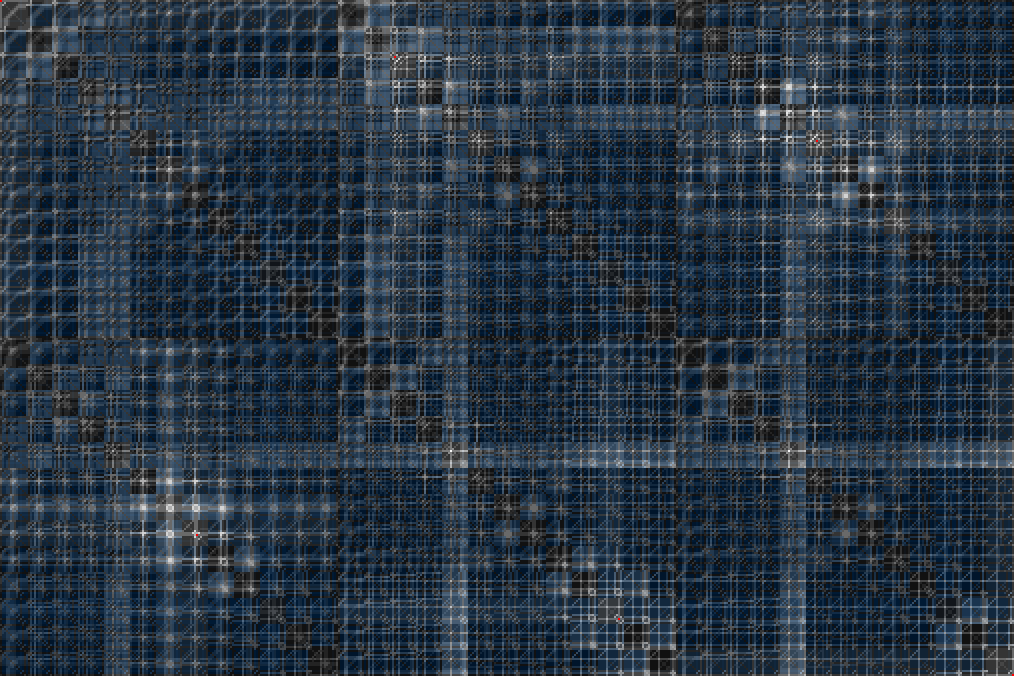
The second one is based on cribbage, colored with the same rules, except in this case the brightness is determined by the score as a cribbage hand (and it starts with ace instead of two, since aces are low in cribbage); each frame represents the card turned up by the dealer after players put their cards into the crib. The blue is more subtle here because flushes are worth less in cribbage than in poker. This ends up with a way more intricate pattern that kind of reminds me of some sort of curved surface reflecting light, and focusing it at the camera when a 5 is turned up. The fifteens give a sort of contrary motion (since higher cards pair with lower cards to form fifteens, whereas for runs and pairs, higher cards pair with higher cards), and the fact that multiple ranks have a value of 10 gives sort of a rounded-corner-ish shape at the beginning. Code
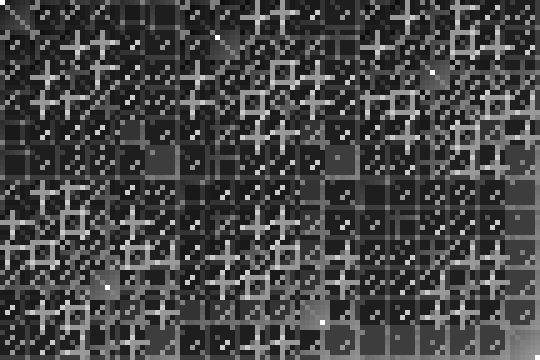
The third one is based on Yahtzee. I decided to go with highest score possible other than chance, when nothing has been used yet. (I excluded chance because it's worth the same as 3-of-a-kind, and always higher than the ones based on specific numbers, so I thought this way would be more interesting.) The most prominent feature here is the bright lines representing short straights. Code