This is my attempt at explaining which visual phenomena I do and don't experience, because making explicit things that people tend to take for granted is a thing I've sometimes thought about. (I started the first version of this in 2011-2012, and then started the HTML version for my website in 2018. I was going to cite as inspiration Eli Dupree's blog post about neurodiversity where ze encourages people to talk about how they experience the world, but it turns out I started this before that post was published.)
This is based on personal knowledge and memories; I'm fairly certain of the things here, but there's some chance I'm misremembering some things or biased by what I think I experience. This was last updated 2026; if you're reading this later, there's a possibility some things may have changed or I might have realized some things are wrong.
Unless otherwise specified, I interpret everything I'm talking about here as being due to how my eyes and brain work, and not as having any sort of deeper meaning or anything.
Images on this page are all just approximations of what I see, and most of them don't quite look right. I have limited artistic ability, and some of these effects might not be exactly representable on a computer screen.
I can focus my eyes at different distances; objects at distances I'm not focusing on look a bit blurry (similar to a camera, though maybe not exactly the same).
As of 2026, I've never used or needed glasses or contacts, and have never had laser eye surgery or anything similar.
If I hold my hand out with my palm facing me, and stick out my thumb towards my face, and then touch my face with my thumb, my hand is approximately the closest distance I can focus (though it's not comfortable for me to focus on things that close; gives me a headache). I haven't noticed a farthest distance I can focus; I can focus far enough that mountains and clouds don't look blurry, though text sufficiently far away can be hard to read.
If I lie with my closed eyes against my arm or pillow, when I open my eyes, sometimes one or both eyes will become blurry. This tends to resolve itself over the course of a few minutes, and is mildly unpleasant.
For a while in the early 2010's I experienced a very faint blurry shadow above objects when the objects had high contrast with what was above them.
Binocular vision
When focusing my eyes at one distance and paying attention to objects at a different distance, I see two copies of objects I'm not focusing on. This is easier to see when focusing farther away and paying attention to something closer. When focusing on the background and looking at the places where one eye is seeing the foreground object and the other the background, the foreground object looks semitransparent, but less transparent near the edges of the object (and maybe a bit noisy?); the relative strengths of the foreground vs. background also seem to vary either randomly or due to unknown factors. This is not unpleasant.
When changing focus, both images appear to move towards each other over the course of about half a second, or away from each other over the course of about a second (unlike normal eye movement, it does not appear instantaneous). I have some control over the speed at which my focus changes and can keep my eyes focused in between the close object and the distant object if I try.
My nose is in my field of vision, and I can be consciously aware of it. It has the same semi-transparency as any other close object, and I can cross my eyes by trying to focus on it (but it's too close to fully focus on).
If I'm looking at something fairly close (like a laptop or phone, probably also works for books) I can intentionally focus further away even if I'm not looking at anything further away. When I was younger I wasn't able to do this at all, and couldn't get parallel stereograms to work, only cross-eyed ones.
Binocular vision focus and blurriness focus tend to change together. It seems like it's usually not possible to make it so that an object is doubled but not blurry or blurry but not doubled (aside from obviously closing one eye), though if I can get two images to line up (like with freeviewing stereo images), it's often possible for me to focus on the image, though it's more difficult and takes several seconds.
The fact that I see two images like this is something that I've been consciously aware of since I was very young; intentionally switching my focus between foreground and background objects is something I did when I was bored around preschool/early elementary school age.
The two images of an object are about equally strong. I suspect I don't have a dominant eye.
Trying to determine my dominant eye by pointing at an object in the distance gives a different result depending on which hand I point with. Pointing with my left hand gives left-eye dominance, and with my right hand gives right-eye dominance. (If I'm using my right hand, the tip of the finger from my right eye is closer to the middle of my visual field (which makes it easier to see and more likely to already be closer to what I'm trying to point to) and closer to the edge of the combined image of my hands (which makes it more prominent as the tip), and vice versa if I'm using my left hand, so that's likely why I get that result.)
There is a specific sensation associated with seeing 3D things, which I only get from various fake 3D effects (such as 3D glasses, the 3DS, pictures where I cross my eyes, etc.). I don't usually get this sensation in the real world (though I did for a few days or weeks shortly after getting my 3DS).
Color
I'm not colorblind; red, yellow, green, and blue all look like very distinct hues to me, not shades of the same color.
I don't think my eyes completely adjust to the white balance of the room (although I think they do adjust somewhat). Rooms lit with ordinary incandescent lighting usually look like they have a yellowish tint, whereas daylight looks normal (I can't tell a difference between sunlight and cloudy, even though they use different white balance settings on cameras), and overcast sunsets look blue. When I was in younger, I remember preferring whiter or bluer lighting over yellower lighting; e.g., the gym at my elementary school had particularly white lights, and I preferred that over the lights in my classroom. This is something I've noticed more when derealization was bad, but it's something that I can always notice just by paying a bit of attention to it.
As far as I can tell, there's not usually a difference in white balance between my eyes, though if the sun is shining in a corner of one of my eyes, that eye will look bluer and have a red tint in the shadows, and when both eyes are open this causes sort of a flickering effect (noticed 2026 after it was mentioned on Stephen and Mal's breakfast stream (December 11, 2025)).
I initially interpreted The Dress as being gold and white (in the shade, with something bright and sunny behind it), but have always been consciously aware of the fact that the actual colors in the image are sort of a brownish color and periwinkle/light maybe-somewhat-purplish blue, and I don't need to cover up the image or anything to see that. The image looks ambiguous to me. (However, I saw the xkcd comic before I saw the actual image, so it's possible that influenced me somehow. Also looking at it again as I'm editing this, the black looks more black.)
On the other hand, most intentionally-made optical illusions that involve same-colored objects on different backgrounds do look different to me (e.g., the squares in the checker shadow illusion don't look the same color to me), and I do need to cover up parts of the picture to see that they're the same.
Colors of specific objects
Violet light, such as at the ends of rainbows (including rainbow sunbeams), looks the same to me (or very similar) as a combination of red and blue. (I haven't tested with a violet laser, though.)
Distant clouds sometimes appear purplish to me.
The color I most strongly associate with tennis balls is green, but after hearing a podcast talking about people disagreeing about what color they were (Hello Internet, don't remember the episode number) I looked at one in real life and it looked more yellow to me (although I think I've seen one since and it looked green? maybe different tennis balls are different colors).
Color names
I first learned the rainbow as "red, orange, yellow, green, blue, purple". I already had that memorized before I first heard the version with indigo and violet, and long before I first heard the acronym "ROY G BIV". There was a time sometime around middle or high school when I thought it should be "red, yellow, green, cyan, blue, magenta" (based on the RGB primaries and secondaries).
As far as I can remember, I've always known that pink was light red, but I remember a time when I didn't know that brown was dark or unsaturated orange (I thought of it as a completely separate color, outside the rainbow, like gray), and I have a specific memory of learning this fact (it was in middle school, and afterwards I made a Java program to display different shades of brown).
I use the terms "magenta" and "cyan" to refer to the RGB secondary colors #ff00ff and #00ffff, respectively, and to colors very similar to those. I'd consider cyan a shade of blue, and magenta a shade of pink.
The colors I associate most strongly with the terms "red" and "yellow" are very close to the RGB primary/secondary #ff0000 and #ffff00. I have less specific associations with green and blue, though the color I would think of when hearing "light blue" is greener (something cyan-ish) than the color I would think of when hearing "dark blue" (more like the RGB primary #0000ff). I would consider "purple" to include both a color between blue and magenta (like #9900ff, and lighter) and a darker version of magenta (like #990099), but not magenta itself. I would consider "pink" to include both magenta (and similar colors) and light red (like #ff9999), but not normal red.
I think of the skin of "white" people as pink, and any other skin color (including east Asians and "black" people) as brown. "Red" hair is clearly orange.
Appearance of light sources
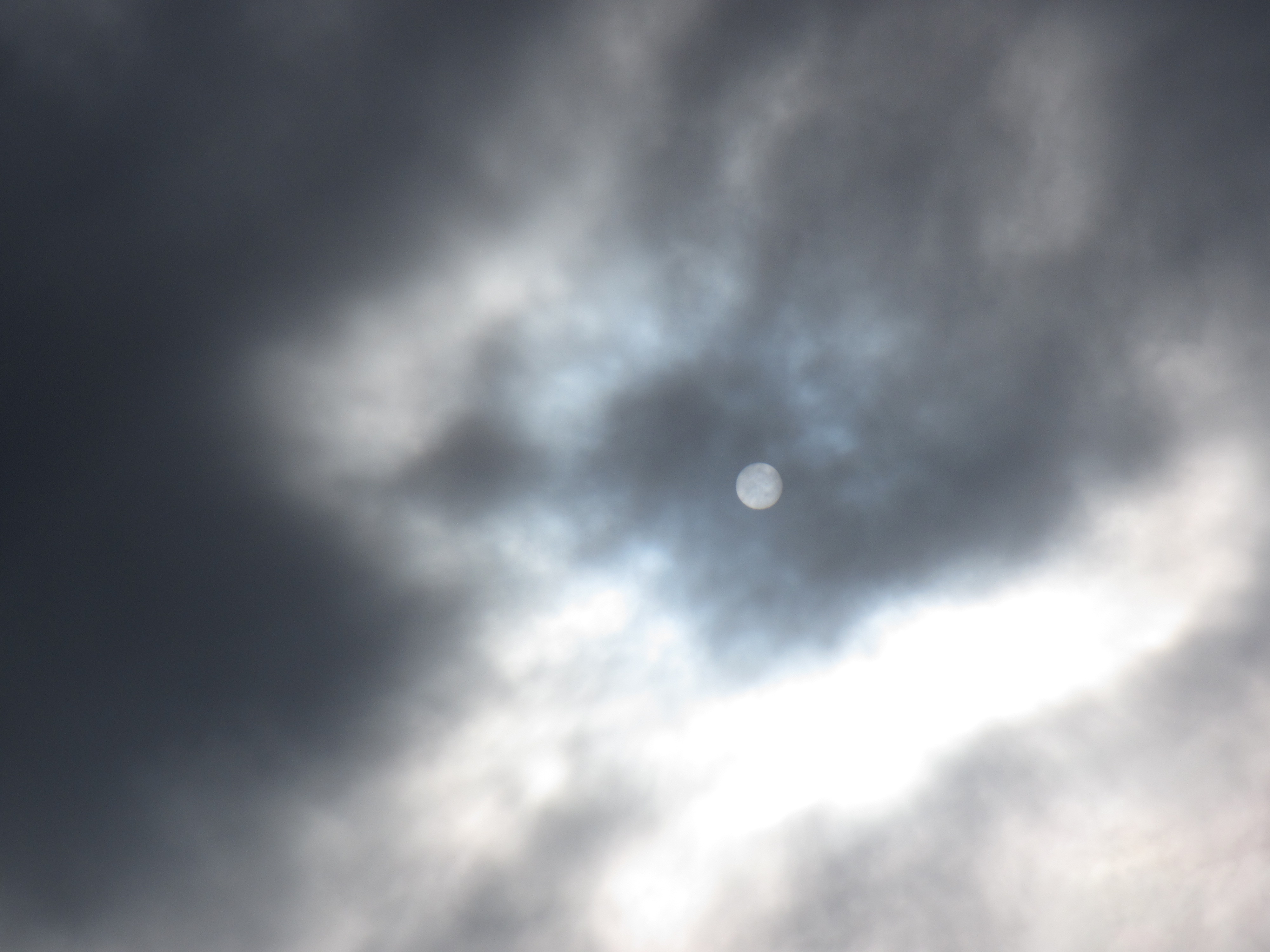
While I don't usually try to stare at the sun, sometimes I accidentally have the sun in my field of vision, and in reflections of shiny objects. (Also I've probably looked at it more than I should while thinking about this page.) The sun looks pretty much like it does in photos, with spiky rays coming out of it, although I think the rays are smaller and more numerous than the picture. The sun looks white, not yellow, when it's not sunset (and not super smoky). The rays can sometimes look a bit rainbowy (maybe some sort of interference pattern-ish?) and sometimes be curved (might be eyelash-related, since they tend to move when I move my eyelids). The reflection of the sun in mirrored and shiny objects also has rays. There was a time in my life when I was younger when I thought the sun looked like it just had four big rays (I think that's what the thing in the sky in this beach picture is supposed to be). Occasionally, when the clouds are just right, the sun looks like a white circle (like the full moon; it looks the same on camera).
At sunset it's usually yellow-orange with rays (never the bright primary yellow that it's sometimes depicted in drawings), and it looks much more yellowish/orangish than it does in photographs (in most sunset photographs I've taken it's still mostly white, whereas it doesn't look white at all to me near sunset). When I was younger, I thought it looked more of a red-orange without rays (as I drew in picture 1, picture 2); more recently there have sometimes been smoky days where the sun looked like that before sunset and then got even redder and disappeared, so probably whatever sunset(s) inspired this were kind of smoky.
Electric lights sometimes (but not always) have a similar spiky thing to the sun, but smaller. I think this is more common if I'm outside (where the surrounding area is dark), and less common for lights that are actually succeeding in lighting up a room. There are also occasions (when it's dark) when there appear to be multiple copies of a light source clustered around each other (some kind of blurred and stretched out); this might be more likely with blue lights, though I think it's also happened with the moon. (When I tried just now, they seem to be in roughly a regular hexagon, though I remember it being more irregular the first time I noticed it; also closing one eye doesn't seem to change the pattern much.)
I remember when I was younger thinking that stars just looked like dots (without the spikiness), rather than the shape that's called a "star", though some more recent time I've noticed some spikiness.
I haven't noticed this as much recently, but I remember from when I was younger: When looking at bright lights, sometimes there will be a long, translucent line extending down from them, not as bright as the light (but the same color). (If the light source is large enough, it'll be a larger shape.) Often there are two of these, at slightly different angles, though from what I can remember they aren't from different eyes. It may be related to how closed my eyes are; it's mostly happened when I was trying to go to sleep, and I think opening my eyes more causes it to go away. (I don't know if it's related, but it tended to coincide with a feeling that I initially thought was a tear bubble that formed between my eyelashes, but later found out was one of my top eyelashes getting caught between my bottom eyelashes.)
Afterimages
If I point my eyes towards something much brighter than the surroundings and then away, I see an afterimage of the light. (The sun usually works for this; light bulbs tend to work; windows work when it's much brighter outside than inside.) I don't have to look at the light particularly long; the shortest time I can look at an object (< 1 second) seems to work just fine.
The afterimage is in the shape of the light, but a bit blurry, and sort of tints what I'm actually looking at. Sometimes there's also a trail from the afterimage to where the light source ended up in my field of vision (especially if it's the sun). Afterimages stay at the same place in my field of vision; I remember when I was younger thinking they moved (since I was moving my eyes), but now I'm conscious enough of my eye movements that I don't think that. (When they "move" they tend to move in jumps.)
Afterimages from bright lights often appear strongest right after I stop looking at the light source, and then get weaker over the course of a second. If they're strong enough, they stick around for a while after that, without getting weaker at a noticeable rate, but they do eventually disappear completely (I once timed an afterimage from the sun, and it was completely gone close to two minutes after it started).
Afterimages from white lights, especially the sun, tend to be saturated colors (though sometimes they seem to be of a hard-to-determine color). Usually they're magenta or a greenish blue, but sometimes yellow or blue; I think they're generally magenta against a light background but blue against a dark background (which suggests one of my cones is temporarily stuck at some middle value). (The magenta is something very close to ordinary #ff00ff; the greenish blue is darker than most blue-green colors I've seen, but also more saturated than teal, and maybe more of an indeterminate color between green and blue rather than a blue-green? I can't seem to approximate it well on my computer, and I suspect this is an imaginary color. The yellow and blue are close to the RGB secondary #ffff00 and primary #0000ff.)
(I've known about magenta afterimages since I was super young (I remember it from a camera flash at least); blue-green and blue I knew about in 2011; I think I realized the blue-green might be an imaginary color in 2019, when I made the photo on the right.)
Things where I'm supposed to stare at an image for some amount of time and then look at something white and it appears in inverse colors usually work as intended (I haven't noticed any bluish or magentaish tint), though blurry. Staring at one spot like that is uncomfortable for me, though. [Image is a screenshot of Wikipedia article on afterimages; if you're wondering why the text is a different font and has blue boxes, that's because of my customizations.]
I think there might also sometimes be some super faint blurry afterimages from, like, lines on a computer screen and such. Not really sure (haven't observed these as much as the other afterimages).
One of my earliest memories (probably around 3 years old) involves lying on my back during nap time, looking up at the ceiling, and seeing colored shapes. I called these shapes "night lights". I asked my mom about them, and she said they were afterimages.
When my eyes are closed
If I close both my eyes, I see a solid color plus whatever afterimages I currently have. If I'm not looking at light, that solid color is black, but if my eyes are pointed at sunlight, my field of vision is bright red instead, or sometimes yellowish, and if I'm in a well-lit room sometimes it's a very faint red. Closing my eyes tighter or covering them makes it black again.
If I close one eye when not looking at sunlight, things look mostly normal (aside from binocular vision–related effects not happening), though everything past my nose looks black if I try to look that way. If I close one eye when it's bright enough to see red, part of my vision (particularly on the side of the closed eye) sort of flickers between the actual image and red; this is unpleasant.
If I rub my eyes (while closed—I never rub them when they're open), the only thing that happens is my field of vision becomes redder and blacker due to my fingers blocking and unblocking the light. I don't see phosphenes, or if I do, they're too faint for me to be sure they're there.
Facial recognition
I think I can recognize people's faces, but I might not be the best at it? Whatever it is I'm doing seems to be automatic, and I can't tell what exact features my brain is paying attention to. I can get thrown off if someone changes their hairstyle or clothing style or stops wearing glasses (though I think I can usually recognize them again; hair is probably worse than clothing).
I can sometimes have problems recognizing people I haven't seen in a long time. Part of that might be that someone I haven't seen might have changed appearance (either the previously-mentioned clothing or hair, or in some cases they grew up or gained/lost a lot of weight or something like that). At one point I noticed there seemed to be a time around the end of middle school/beginning of high school where if the last time I've seen someone is before this time, I'm unlikely to recognize them, which might have something to do with the fact that anyone from that period of my life either used to be bigger than me but now isn't, or used to be a child but now isn't; or maybe something changed about how I recognize people around that time. (However, I haven't seen enough people from high school recently to know if I'd recognize them now, so I don't know if this is an amount-of-time thing or a before-a-certain-age thing.)
A couple other things that can get in the way of facial recognition:
I lack confidence if I don't know that the person is someone I know. That is, if I'm in a group where I know everyone (or most people), it's usually not that difficult to tell people apart, but if I saw someone from that group just out in public there would be a part of me thinking, "wait, is that really the person I know, or just someone who looks kind of similar?".
I think some instances of me not recognizing people are that I previously saw them in a group, and in that group I didn't pay much attention to them in particular. (I'm not very social so there often won't be many people in a group who I've talked to much, but there are still usually people I notice and pay attention to more than others, for various reasons.)
Also, I'm not sure if this is still true, but at some point in my life I noticed that I frequently can't remember someone's hair color if they have certain hair colors (in particular, I think brown and black are the same to me in my memory, even though I could tell them apart if I were actually looking at them). I hardly ever remember eye color, unless I specifically payed attention to it.
Other optical phenomena
I see floaters when looking at the bright sky. They are always circular, typically a dot surrounded by a circle ⊙ (both semi-transparent black, with semi-transparent white in between), but sometimes two concentric circle outlines ⊚. Some of them appear in clumps, others alone. They vary in size, with the larger ones tending to be more transparent, and the largest I would estimate to be about half the radius the sun or moon appears in the sky. They tend to slowly move around, and when I move my eyes, they at least sometimes seem to move to where I'm looking over the course of a second after I move my eyes (not instantaneously like afterimages do).
I sometimes experience the blue field entropic phenomenon, though I think for me the dots tend to be faster and more numerous than the GIF currently on that page. For some reason occasionally if I cough really hard I start experiencing it, even if I'm inside.
Some number of years ago there were optical illusions going around that were supposed to look like they're moving when they're actually not. To me they generally appeared to move for at most a second each time I move my eyes, and appear static if I stare at a single spot.
I'm not sure if I experience visual snow. I don't seem to experience obvious visual snow most of the time, but I think I might when it's really dark or my eyes are closed, and maybe sort of do other times very vaguely? If I do, it's not super obvious.
I think I've very occasionally (probably less than once per month, possibly less than once a year?) seen blurry dark things (maybe sometimes bright?) flash very briefly in the corner of my vision (at least the most recent time I think it was sort of a blurry grid?). I don't know what circumstances cause this.
In certain conditions, edges of still objects can appear to vibrate (quickly and with low amplitude). (I suspect being at a certain distance might be relevant; not sure but I think the times I've noticed this have been in bright sunlight. I think I first noticed this sometime in the 2020's.)
Unpleasant things
When I still used CRTs, I remember having them at 60 Hz refresh rate being uncomfortable to me (this looks like the image being unpleasantly bright, not a conscious awareness of the flicker). Possibly related, there have been times when looking at computer or TV screens where I feel like the image is too bright, even though it doesn't seem brighter than normal.
Blinking things can be unpleasant for me, particularly if they affect large portions of my visual field (so, blinking cursors and indicator lights are usually okay, but the main light in the room or an entire computer screen is too much). Emergency vehicles can also cause problems, at least at night. This tends to be a derealization trigger. I don't know if this is related to photosensitive epilepsy at all (I do sometimes worry about it, even though I don't think I've ever had a seizure). This seems unrelated to my problem with 60 Hz CRT's.
Seeing someone else put eye drops in their eye, or I think in some cases just thinking about putting something in someone's eyes, can cause my eyes to water and want to close and be unpleasant. However, in Ocarina of Time when you shoot eyes with arrows that doesn't seem to cause this; I think they're generally abstract enough.
I think sometimes putting lenses up to my eyes (I think this has happened with kaleidoscopes) and certain kinds of disagreement between my two eyes have bothered my eyes in a similar way. I don't think it used to as much when I was younger; there was a time when I frequently looked through a camera viewfinder with my right eye while looking normally with my left, and I think that would probably bother me now.
Light and dark
If it's dark enough that there's any significant part of my vision that's completely black, I find it unpleasant, and always have since I was little. It's not because I'm afraid of anything in the dark. I think it's mainly a sensory thing—large areas of pure black result in what's possibly visual noise along with perhaps a feeling of pressure on my eyes, and at least sometimes an unpleasant feeling that it's getting even darker gradually (and a feeling like I need to move my eyes every few seconds, which resets the darkness level). These effects do not happen if I close my eyes in a well-lit room. (Darkness can also be a derealization trigger.)
There have been cases, particularly when I'm inside at night and lights are on, where things have seemed too bright and maybe simultaneously too dark. I think this had something to do with derealization. (Sensitivity to light and dark in general seems to be more of an issue when I experience derealization; see that page for more information.)
I basically never wear sunglasses. I currently don't own a pair; it's possible there was a time when I was super young when I wore sunglasses (I can't remember), but I don't anymore. (The only exception is at the dentist, where they give me sunglasses to block out the big light they shine on my teeth, which is apparently a thing some dentists do and others don't.)
While some things are unpleasant, I don't think any visual stimulus can cause actual physical pain, except trying to focus too close and the things that I mentioned can cause my eyes to water. In particular, things like bright, clashing colors don't cause physical pain.
From Slate Star Codex post about HPPD: I haven't experienced static objects seeming to "breathe" or move (other than the vibration mentioned above), any sort of auras around people or objects, grids overlayed on my vision, or rainbow patterns on ceilings and carpets.
![[Two overlapping images of my hand in front of a closet, as described.]](double-hand.jpg) When focusing my eyes at one distance and paying attention to objects at a different distance, I see two copies of objects I'm not focusing on. This is easier to see when focusing farther away and paying attention to something closer. When focusing on the background and looking at the places where one eye is seeing the foreground object and the other the background, the foreground object looks semitransparent, but less transparent near the edges of the object (and maybe a bit noisy?); the relative strengths of the foreground vs. background also seem to vary either randomly or due to unknown factors. This is not unpleasant.
When focusing my eyes at one distance and paying attention to objects at a different distance, I see two copies of objects I'm not focusing on. This is easier to see when focusing farther away and paying attention to something closer. When focusing on the background and looking at the places where one eye is seeing the foreground object and the other the background, the foreground object looks semitransparent, but less transparent near the edges of the object (and maybe a bit noisy?); the relative strengths of the foreground vs. background also seem to vary either randomly or due to unknown factors. This is not unpleasant.![[Diagram of two copies of a right hand pointing, with the fingertip of the copy on the left labeled "It feels more natural for this fingertip to point to the object than the other one". Then the mirror image for my left hand, with the right finger labeled "Same with this one."]](double-point.svg) Trying to determine my dominant eye by pointing at an object in the distance gives a different result depending on which hand I point with. Pointing with my left hand gives left-eye dominance, and with my right hand gives right-eye dominance. (If I'm using my right hand, the tip of the finger from my right eye is closer to the middle of my visual field (which makes it easier to see and more likely to already be closer to what I'm trying to point to) and closer to the edge of the combined image of my hands (which makes it more prominent as the tip), and vice versa if I'm using my left hand, so that's likely why I get that result.)
Trying to determine my dominant eye by pointing at an object in the distance gives a different result depending on which hand I point with. Pointing with my left hand gives left-eye dominance, and with my right hand gives right-eye dominance. (If I'm using my right hand, the tip of the finger from my right eye is closer to the middle of my visual field (which makes it easier to see and more likely to already be closer to what I'm trying to point to) and closer to the edge of the combined image of my hands (which makes it more prominent as the tip), and vice versa if I'm using my left hand, so that's likely why I get that result.)![[A picture of the sun: it's a white ball with white rays coming out of it, and the outline of the ball isn't very sharp or visible.]](sun.jpg) While I don't usually try to stare at the sun, sometimes I accidentally have the sun in my field of vision, and in reflections of shiny objects. (Also I've probably looked at it more than I should while thinking about this page.) The sun looks pretty much like it does in photos, with spiky rays coming out of it, although I think the rays are smaller and more numerous than the picture. The sun looks white, not yellow, when it's not sunset (and not super smoky). The rays can sometimes look a bit rainbowy (maybe some sort of interference pattern-ish?) and sometimes be curved (might be eyelash-related, since they tend to move when I move my eyelids). The reflection of the sun in mirrored and shiny objects also has rays. There was a time in my life when I was younger when I thought the sun looked like it just had four big rays (I think that's what the thing in the sky in
While I don't usually try to stare at the sun, sometimes I accidentally have the sun in my field of vision, and in reflections of shiny objects. (Also I've probably looked at it more than I should while thinking about this page.) The sun looks pretty much like it does in photos, with spiky rays coming out of it, although I think the rays are smaller and more numerous than the picture. The sun looks white, not yellow, when it's not sunset (and not super smoky). The rays can sometimes look a bit rainbowy (maybe some sort of interference pattern-ish?) and sometimes be curved (might be eyelash-related, since they tend to move when I move my eyelids). The reflection of the sun in mirrored and shiny objects also has rays. There was a time in my life when I was younger when I thought the sun looked like it just had four big rays (I think that's what the thing in the sky in ![[A picture of an afterimage of a light; it's a blue and blurry blob.]](light-afterimage.jpg) If I point my eyes towards something much brighter than the surroundings and then away, I see an afterimage of the light. (The sun usually works for this; light bulbs tend to work; windows work when it's much brighter outside than inside.) I don't have to look at the light particularly long; the shortest time I can look at an object (< 1 second) seems to work just fine.
If I point my eyes towards something much brighter than the surroundings and then away, I see an afterimage of the light. (The sun usually works for this; light bulbs tend to work; windows work when it's much brighter outside than inside.) I don't have to look at the light particularly long; the shortest time I can look at an object (< 1 second) seems to work just fine.![[Screenshot including an image with the word "Afterimage" in red on a green background. Next to it is a blurry pink rectangle the same size as the green background, with some blurry cyan in the middle, not clear enough to read.]](stare-afterimage.png)
![[Picture of a blue sky with many slightly-blurry copies of dots surrounded by circles. There's some variation in size, with larger ones more transparent; some are separate, but there's also a clump and a line of them.]](floaters.png) I see floaters when looking at the bright sky. They are always circular, typically a dot surrounded by a circle ⊙ (both semi-transparent black, with semi-transparent white in between), but sometimes two concentric circle outlines ⊚. Some of them appear in clumps, others alone. They vary in size, with the larger ones tending to be more transparent, and the largest I would estimate to be about half the radius the sun or moon appears in the sky. They tend to slowly move around, and when I move my eyes, they at least sometimes seem to move to where I'm looking over the course of a second after I move my eyes (not instantaneously like afterimages do).
I see floaters when looking at the bright sky. They are always circular, typically a dot surrounded by a circle ⊙ (both semi-transparent black, with semi-transparent white in between), but sometimes two concentric circle outlines ⊚. Some of them appear in clumps, others alone. They vary in size, with the larger ones tending to be more transparent, and the largest I would estimate to be about half the radius the sun or moon appears in the sky. They tend to slowly move around, and when I move my eyes, they at least sometimes seem to move to where I'm looking over the course of a second after I move my eyes (not instantaneously like afterimages do).